Showing posts with label Chewa. Show all posts

Sunday, 21 December 2014

Yao story of creation


Eons ago, before the dawn of time, God existed only with animals. As in many Bantu creation myths, God and animals were eternal, they have always been there since the beginning of time. They lived in a vast expanse of land and water, and the sky and earth were ever close to each other.

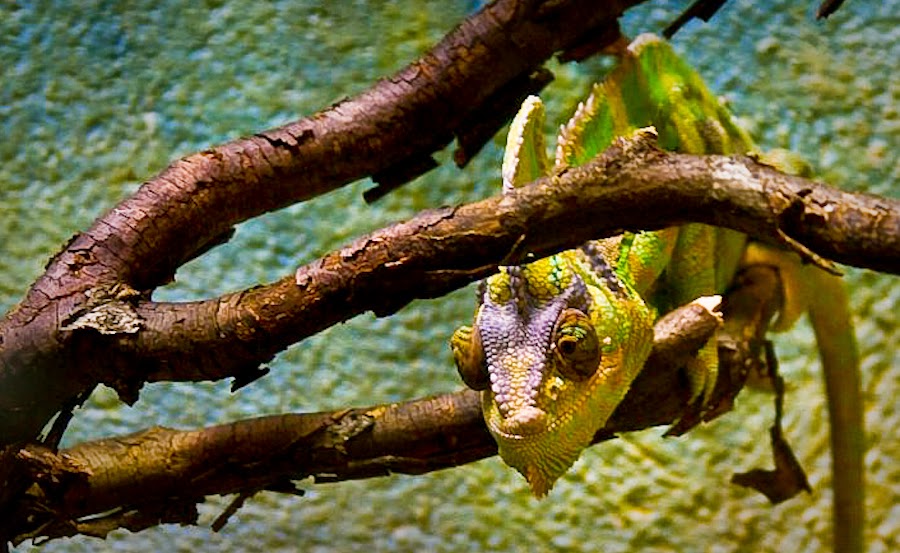
The chameleon was a mythical creature, a fisherman casting his fish traps in the mystical waters. The chameleon has always been an important animal in Bantu myths and legends. It is at the heart of many Bantu tribe creation myths. It is seen as a wise creature and also a herald of life and death.


One day the chameleon had set a fish trap in the vast sapphire waters. He went about his daily business, but when he later on returned to check the trap, he found that he had caught nothing. Chameleon was determined to get a catch, he set the trap again the following day and when he went to check the trap to his surprise he had caught some very peculiar creatures, man and woman.

Man and woman were such tiny creatures, the first of their kind. The chameleon had never seen anything like them and he did not know what to do with them. Man and woman begged the chameleon that he should set them free. Chameleon, confused about what to do decided to take them to God to seek advice as what to do with them. 

God, having seen the tiny creatures told the chameleon not to kill them. He told chameleon that he should set them fee so that they should live to grow to their full maturity. God summoned all the animals of the skies above and the earth and water below to inform them about the creatures and this marked the first encounter of human beings and animals. 

The human beings were smart and learned quickly. They started hunting other animals and the animals lived in fear. Soon the male creature started twirling sticks and smoke started to gather. This caused fear among the animals and they warned man to be careful. Man however did not heed the warning and in the end fire was created. Man created an unstoppable inferno that reduced everything to ashes. The grass thatched roof of God was set alight by the fire, chameleon managed to climb a tree, but God was very old he could not run, spider spun a web to rescue God. From that moment it is said that God said when humans die they shall join him in heaven and serve him as slaves.


This is the creation myth of the Yao tribe of Malawi. This myth has similarities to other creation myths of the Bantu tribes, including the Chewa tribe of Malawi.

Friday, 3 August 2012

The Kasiyamaliro, consoler of souls


The Kasiyamaliro is the Great Mother of Gule Wamkulu and probably the most important Nyau. It is said to be the principle Nyau, symbolizing the mother ancestor. Serving as the consoler of souls and of transition, it is almost omnipresent at every performance such as Chewa initiations thus signifying its importance.  And it is of ancient origins such that Zaire cave paintings dating back 992 C.E have depicted the Kasiyamaliro.

The Kasiyamaliro is an ancestral spirit, an antelope of pure and ancient origins. It’s said to have arisen from the pure, white serene waters of the deep underground pool from which the Chewa spirits come from, the depths of the world.  Beneath the belly which it shuffles on is the abyss of the world, the womb of the Great ancestral Mother and the grave. 

Its name means 'to leave the funeral' and it plays an important role at the completion of the funeral ceremony as it accompanies the dead to the grave. It may dance around the house or be taken into it and this is believed to absorb the spirit of the deceased. It channels the deceased member into the ancestral spirit world with aid of the mask. Its horns and dramatic arches of its back emphasize is duality, its Ying and Yang function. The spirit embodies qualities of angelic and demonic entities, the womb and the tomb, life and death.


One similar ancient deity would be the Egyptian icon of Anubis. Though portrayed as a Jackal, he had a similar role as the Kasiyamaliro. He had a funeral role as well as protection of the deceased for their journey into the afterlife. He was also guardian of the scales of balance, the similar Ying Yang role.


The Kasiyamaliro is portrayed as an antelope, probably impala, kudu or eland. It may be up to 2 meters high with a trough in the middle of its back often covered in dried woven maize husks, these mask forms are the first to appear in performances to remember the deceased, as a sign that the deceased have now joined the sprits and ancestors. Similar to the way the boy is born into the womb of this ancient antelope, the deceased will similarly be reborn during the luminal period which follows death, led by the same spirit that gave birth to him.

The Kasiyamaliro is burned after returning from the grave, and its smoke that disappears into the air signifies that the deceased has crossed the realms and become an ancestral spirit.

Friday, 27 July 2012

A Dark and Bloodstained Past, Slavery in Malawi


"To overdraw its evils is a simple impossibility ... We passed a slave woman shot or stabbed through the body and lying on the path. Onlookers said an Arab who passed early that morning had done it in anger at losing the price he had given for her, because she was unable to walk any longer. We passed a woman tied by the neck to a tree and dead ... We came upon a man dead from starvation ... ‘’ – David Livingstone


When we hear about slavery most people think about the Atlantic slave trade, but it goes beyond that as it affected all parts of the world. Even within Africa several nations such as the Ashanti of Ghana and the Yoruba of Nigeria were involved in slave-trading. Many countries including the peaceful landlocked country of Malawi were also subjected to the practice. Slavery, is the state of being bound in servitude as the property of a slaveholder and is often associated with toiling under harsh condition, being unappreciated, being subjected to torture and death. Some of the horrific things have already been described by David Livingstone. There were multiple routes within Malawi and they acted as a channel to the east coast of Africa. Some people are unaware of the practice and what happened exactly happened in Malawi and I hope this will shed some light. And as you will see, nations such as the Yao of Malawi were not so different from the Ashanti or the Yoruba.


Slave trade was introduced in Malawi by the Swahili-Arab traders in the 19th Century following a great demand for ivory and slave in the East African markets of Zanzibar, Kilwa, Mombasa and Quelimane. The Swahili -Arabs travelled further and further into the landlocked counties of Africa that we know today including Malawi to obtain slaves and ivory. Malawi was an important and crucial area of operations for Arab slave traders as it provided a slave trade route to the east coast but the incursions of slaving took a heavy toll on the inhabitants. But with entrance of the Yao tribes which have said to come from the Mozambique and East Africa into the southern part of present day Malawi they proved to be a catalyst of the slave trade. The Yao’s had been converted to Islam by the Arabs and were allies to the Swahili-Arab traders and they were well-armed and facilitated the trade. Yao’s moved north killing, tormenting and capturing the Chewa and Maganja by the hundreds, tribes that had migrated from present day Congo because of war and disease seeking peace now only to find chaos yet again. Countless multitudes died on the forced march that often took as long as three months to reach the coast of East Africa. The tragic path finally reached the edge of the Indian Ocean and the hapless slaves were put aboard ships destined for Zanzibar. Here the conditions were so cruel that records show where a cargo of 300 could easily be reduced to only 20 or 30 reaching port.

The main Slave Route in Malawi, were Nkhotakota, Karonga, Mangochi and Phalombe where the Swahili-Arabs and their Yao allies built their headquarters. They organized expeditions to capture slaves and thousands were said to have died in the night raids by the Omani raiders. Some of the coastal trading centres on Lake Malawi became infamous as slave trading centres and these routes were the major and crucial terminal of the Slaves in the entire of Central Africa going to the East African Coast Markets of Zanzibar, Kilwa, Mombasa and Quelimane. Zanzibar, under Omani Arabs in the 19th century had as many as 50,000 slaves passing through the city each year.


One of Slave Trade Route was Nkhotakota where one of the Swahili-Arab slave traders, Salim-bin Abdullah , also known as Jumbe, a Zanzibar trader of mixed Arab and African Descent set up his headquarters on the shore of Lake Malawi in the 1840s. From here he organized his expeditions to obtain slaves and ship them across the lake to East African markets. The captives were kept until they number 1000 and taken across the lake and then forced to walk for three to four month journey to Kilwa where they were sold. And by the 1850s, Nkhotakota had become the main terminus from which as many as 20,000 slaves annually were shipped across the lake from present-day Malawi to the Indian Ocean port of Kilwa Kivinje.


In 1861, Livingstone became possibly the first European to reach Nkhotakota, and he described the area as ‘abode of lawlessness and bloodshed…literally strewed with human bones and putrid bodies’. Livingstone returned to Nkhotakota in September 1863, hoping to convince the incumbent Jumbe ruler to abandon the trade in slaves. Though the two men engaged in a lengthy meeting, Livingstone’s efforts were in vain, and slave trade out of Nkhotakota continued into the 1890s, when Commissioner Harry Johnston persuaded the ageing Jumbe to sign a treaty in exchange for British protection. However, the treaty did not last long as Jumbe continued with slave trade. It was up until Nyasaland came under the British protectorate in 1891 that slave trade completely came to cease. It was Sir Harry Johnston who was the first Commissioner in Nyasaland Protectorate who made a significant effort to stop the trade. Sir Harry Johnston with a force of Sikh soldiers attacked Jumbe in 1894. He was tried and banished to Zanzibar.

Another Slave Route was at Karonga where Mlozi, another Swahili-Arab, settled and terrorized the Nkhonde people and seized them as slaves to Zanzibar. He organized surprise raids as far as Chitipa and Zambia. He also employed a number of the Swahili from Tanzania who undertook such expeditions. He, however, came into conflict with African Lakes Company, formed by Scottish businessmen and brothers, John and Fredrick Moir in 1878. It was until Sir Harry Johnston yet again who sent soldiers and defeated Mlozi who was tried by the Nkhonde chiefs and hanged.

Another Slave trade route passed through the southern shores of Lake Malawi into Tete Province and Zambezi valley in Mozambique. Here the controllers of the route were the Mangochi Yao chiefs namely Mponda, Jalasi and Makanjira. The other slave trade route passed through the southern highlands and was also controlled by the Yao chiefs. Nyezerera and Mkanda controlled the sub route passing between Mulanje Mountain and Michesi Hill in what is now Phalombe District. Two other Yao chiefs controlled the sub route passing through the southern part of Mulanje Mountain and these were Chikumbu and Matipwiri.

Fighting ensued in 1887–89, and pacification was completed only some years after the British government had annexed the whole of the territory in 1891. Almost all the Yao chiefs stopped Slave trade after being defeated by the British Colonial Government forces led by Sir Harry Johnston. After the defeat, the Colonial Government erected forts along the slave routes to check slave trafficking and to bring peace in the area. Some of the forts are still intact up to date.


Slavery has been a great topic even up to today, not only because of its ethics but also because of it massive effect and implications that still linger on. Countless Malawians were affected then and even in a dark and bloodstained past, the fallen ought to be remembered.


Saturday, 14 July 2012

The Great Dance, Gule Wamkulu


The Gule Wamkulu (Great Dance) is a dance cherished and sacred to the hearts of the Chewa people of Malawi. It is a symbolic, religious masked dance performed by the Nyau society at various occasions such as funerals, weddings, installation of traditional chiefs and authority, initiations as well as ceremonies of local or national proportion.

Nyau is the presence of the dead, an encounter with a spirit and so it is associated with fear and ritual dread.  There are a variety of masks symbolizing different spirits or aspects of life such as fertility or death.  And the dance is seen as a gateway that transverses the realms of the present and that of the ancestors and spirits, once forming the cosmology or indigenous religion of the Chewa people. The belief system's foundation of the dance is based on communication with those who are dead, or their spirits, calling this act pemphero lalikulu (Great Prayer).


The dance fuses religion, centuries of tradition and rituals as it not only entertains but conveys a message. It makes the borders of the realms indistinct, blurring the senses, hypnotizing and draw you in by curiosity only for a while. The dance involves complex footwork, great stamina and flinging dust into the air to create dust clouds. The dancers shuffle, step and respond to specific drum beats and songs depending on the mask he is wearing. The purpose of the dance is said to be a way of communicating messages of the ancestors to the villagers and making possible continued harvests and continued life. But each particular mask and dance serve a particular role. Each of these figures plays a particular, often evil, character representing certain forms of misbehaviour in order to teach moral and social values to the audience, or to tell a story by dance.


The dancers are men who have been initiated, and it is the chief of the village who has appointed them. And Initiation of men into the secret society is said to begin with living in a cemetery for a week or more, but no one knows what goes on there. This Nyau brotherhood is then responsible for the initiation of young men into adulthood, and the performance of the Gule Wamkulu at the end of the initiation procedure to celebrate the young men’s integration into adult society. The Nyau societies are found within villages but they are part of a larger network. With the society being so secretive, the dancer's masks become their identity and thus lead a secret double life. The society is said to have coded language, riddles, metaphors, myths and signing. The men are actual spirits in the ritual, and cannot be spoken of as men even though women may recognize their husbands, fathers, brother and uncles. Identifying the man wearing a mask is disrespectful to the religion.


Nyau dancers wear costumes and masks made from a variety of things, wood, paint, feathers, metal, wool, animal skin, representing a great variety of characters, such as wild animals, spirits of the dead or slave traders. Some masks made of animal hide or horns are believed to capture the soul or spirit of the deceased that brings renewed life. Some have a blank but horrific appearance, others a fixed enigmatic expression. When the dancer wears the mask, not only do they change their appearance, they also evoke a persona to match. Fierce masks will most undoubtedly evoke a high energy persona that would breakout into a wild dance and would kick up a cloud of dust and leave bystanders in awe. With hundreds of masks out there, the dance and experience would always be different with a different meaning.


There are different perceptions about them either by gender, age or even race. Most children are frightened by them, even some older people are. During performances with the masks it has been observed that women and children often rush into the houses when a Nyau performer threatens. But generally tourists or foreigners are intrigued by them. Not all this holds true, as it seems that nearly everyone you talk with about the Gule will give you a somewhat different story about them.

There is evidence that Gule Wamkulu existed during the great Chewa Empire of the 17th century. Despite the efforts of Christian missionaries to ban this practice in Chewa communities in Malawi, it managed to survive under British colonial rule by adopting some aspects of Christianity. Due to Westernization the Nyau society is becoming weakened, but since 2005, Gule Wamkulu has been classified as one of the 90 Masterpieces of the Oral and Intangible Heritage of Humanity, a program by UNESCO for preservation of intangible cultural heritage. It is hope that the dance and traditions will be preserved for future generations.

Experience a world of ancient tradition and ritualistic mystery of song and dance that echo through time and space, transverse the realms of the present and that of the Chewa ancestors and spirits for a while, come and let your self be drawn in and experience The Great Dance.