Showing posts with label Spirits. Show all posts

Thursday, 14 February 2013

How To Make It Rain; A Malawian Ancestral Story of Mbona the Rain Maker


The Rain, some take it casually, not realizing how essential it is for life, but others know all too well that rain means survival. In Some places rain comes so frequent or so much that it is taken for granted or people wished it rained less often, and in other places rain comes so little or not at all that livelihoods are destroyed.


 In places where rain is crucial you'll probably find people of great faiths devoted to rain, the rainmakers and rainmaking cults. There are various cults around the world that practice or practiced some sort of rainmaking rituals. The native Indians of North America had rain dances and similar practices occurred and still do in parts of Africa including Malawi.


Khulubvi sacred shrine is located in Nsanje District, in the lower Shire Valley in Southern Region of Malawi, It is an important spiritual place among the people of Mang'anja tribe. It is a place where the Mang'anja worship the spirit of Mbona.


Mbona was a legendary rain maker with superhuman powers who lived in Nsanje. He had knowledge of medicine and magic, and he had a gift bestowed onto him from the heavens to govern the rains. Apart from bringing rain, he could also create wells of water on sandy lands, create forests where they did not exist and hide from enemies by turning into other creatures such as guinea fowls. He had a wife named Salima who almost always stayed in the compound, only visited by elderly women and children. She ventured on a few occasions to some villages assisting Mbona on matters of divinity.

Mbona's uncle Mlauli, who was also a conjurer resented his nephew and wanted to kill Mbona because of his extraordinary abilities. Mlauli, however, failed to kill his nephew because Mbona wished to die on his own accord. He told Mlauli and his enemies to cut his throat with a reed after other weapons had failed to harm him. Thus this was his was his fate. It is said that His head was cut and placed at Khulubvi sacred grove.

Mbona's shrine lies in the Sacred Khulubvi grove in Nsanje, protected by the shrine guardians. Mbona's head is said to have been entombed on the floor of his hut. The shrine is never cleaned or swept. Only those of the Mang'anja tribe are allowed with permission from the guardian. The sanctuary is sacred ground; no one can cut down any tree, plant any crops or let their cattle graze. 


There a number of huts in the area, but most importantly includes Mbona's hut and close to that his wife's hut Salima. After the death of Mbona she still played an important role, she would be visited at night by Mbona in the form of an enormous python and he would tell her the future, so as to inform the village of what to plant and what not to. She would communicate to the village via a trance like state, she was the oracle.

After her death the cult continued with succession of oracles. The ultimate responsibility for the cult lies with the Lundu paramount, who is to provide Mbona with a “wife.” This elderly woman, called Salima, lives in Khulubvi and communicates Mbona’s wishes received through dreams and possession. An outside medium may also perform this function, and local chiefs have subsidiary shrines. The spirits communicates via this medium and their lineages spans generations and there is a system of succession.


People came to worship, bringing with them black cloth or a black goat, an offering to Mbona in exchange for rain, water, life. Escorted by the chiefs and village headmen they went to Mbona's hut. After they returned home and finished the sacred rites the sky would rip open and the ground would be blessed by rain.


The Khulubvi and Associated Mbona Sacred Rain Shrines are a world heritage site (UNESCO).

Saturday, 14 July 2012

The Great Dance, Gule Wamkulu


The Gule Wamkulu (Great Dance) is a dance cherished and sacred to the hearts of the Chewa people of Malawi. It is a symbolic, religious masked dance performed by the Nyau society at various occasions such as funerals, weddings, installation of traditional chiefs and authority, initiations as well as ceremonies of local or national proportion.

Nyau is the presence of the dead, an encounter with a spirit and so it is associated with fear and ritual dread.  There are a variety of masks symbolizing different spirits or aspects of life such as fertility or death.  And the dance is seen as a gateway that transverses the realms of the present and that of the ancestors and spirits, once forming the cosmology or indigenous religion of the Chewa people. The belief system's foundation of the dance is based on communication with those who are dead, or their spirits, calling this act pemphero lalikulu (Great Prayer).


The dance fuses religion, centuries of tradition and rituals as it not only entertains but conveys a message. It makes the borders of the realms indistinct, blurring the senses, hypnotizing and draw you in by curiosity only for a while. The dance involves complex footwork, great stamina and flinging dust into the air to create dust clouds. The dancers shuffle, step and respond to specific drum beats and songs depending on the mask he is wearing. The purpose of the dance is said to be a way of communicating messages of the ancestors to the villagers and making possible continued harvests and continued life. But each particular mask and dance serve a particular role. Each of these figures plays a particular, often evil, character representing certain forms of misbehaviour in order to teach moral and social values to the audience, or to tell a story by dance.


The dancers are men who have been initiated, and it is the chief of the village who has appointed them. And Initiation of men into the secret society is said to begin with living in a cemetery for a week or more, but no one knows what goes on there. This Nyau brotherhood is then responsible for the initiation of young men into adulthood, and the performance of the Gule Wamkulu at the end of the initiation procedure to celebrate the young men’s integration into adult society. The Nyau societies are found within villages but they are part of a larger network. With the society being so secretive, the dancer's masks become their identity and thus lead a secret double life. The society is said to have coded language, riddles, metaphors, myths and signing. The men are actual spirits in the ritual, and cannot be spoken of as men even though women may recognize their husbands, fathers, brother and uncles. Identifying the man wearing a mask is disrespectful to the religion.


Nyau dancers wear costumes and masks made from a variety of things, wood, paint, feathers, metal, wool, animal skin, representing a great variety of characters, such as wild animals, spirits of the dead or slave traders. Some masks made of animal hide or horns are believed to capture the soul or spirit of the deceased that brings renewed life. Some have a blank but horrific appearance, others a fixed enigmatic expression. When the dancer wears the mask, not only do they change their appearance, they also evoke a persona to match. Fierce masks will most undoubtedly evoke a high energy persona that would breakout into a wild dance and would kick up a cloud of dust and leave bystanders in awe. With hundreds of masks out there, the dance and experience would always be different with a different meaning.


There are different perceptions about them either by gender, age or even race. Most children are frightened by them, even some older people are. During performances with the masks it has been observed that women and children often rush into the houses when a Nyau performer threatens. But generally tourists or foreigners are intrigued by them. Not all this holds true, as it seems that nearly everyone you talk with about the Gule will give you a somewhat different story about them.

There is evidence that Gule Wamkulu existed during the great Chewa Empire of the 17th century. Despite the efforts of Christian missionaries to ban this practice in Chewa communities in Malawi, it managed to survive under British colonial rule by adopting some aspects of Christianity. Due to Westernization the Nyau society is becoming weakened, but since 2005, Gule Wamkulu has been classified as one of the 90 Masterpieces of the Oral and Intangible Heritage of Humanity, a program by UNESCO for preservation of intangible cultural heritage. It is hope that the dance and traditions will be preserved for future generations.

Experience a world of ancient tradition and ritualistic mystery of song and dance that echo through time and space, transverse the realms of the present and that of the Chewa ancestors and spirits for a while, come and let your self be drawn in and experience The Great Dance.


Monday, 18 June 2012

Sapitwa peak, Malawi's own Bermuda triangle?


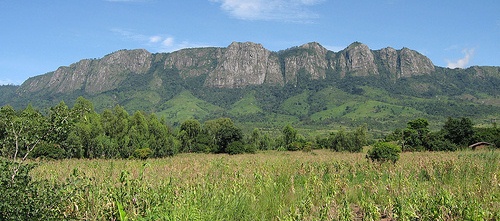
For a place literally translated as "a place where people do not go", Sapitwa Peak of Mulanje Mountain is a popular tourist attraction. Sapitwa soaring at (3001m), the highest point in Central Africa is achievable without any technical experience, a worthy goal and totally unresistable to any hiker. The mountain itself is stunning, from the landscape to the views, pools, rivers and waterfalls.


But nothing is complete without a good old myth. It’s the pinch of salt that brings out that flavor of  the expedition. With superstition being rather common in the country; it’s not surprising the mountain has its very own myth. 

Since time immemorial, there have been some beliefs to the effect that ancestral spirits of the people that once lived around Mulanje Mountain are still present.


These spirits are manifested in different ways. For example, the are testimonies to the effect that  people have found already prepared food on the Sapitwa and all one  has to do if faced with such a situation is to just eat the food and never invite friends to help you finish the meal. So, this food could be anything an example could be an enormous pile of bananas. Seriously? Who could possibly finish that by themselves without assistance from a friend? Other examples have been honey and even the local staple having already been prepared. Trust me, when you hear a local from that area tell the story, they will tell it in all seriousness, even chiefs. Whether you believe it or not, this belief is deeply rooted.

Some myths are just strange though, this one is an example. Usually myths are supposed to have a story to it, either there was good and evil, right and wrong, heroes and villains, and something happened to end the way it did. But in this case there are spirits who indirectly ask you to follow instructions or face the consequences. But why? Is there a deeper meaning? A greater purpose maybe? Or is it for just a good laugh? Anyway, I personally if faced in such a scenario would 'probably' eat whatever it is probably of fear of the unknown, only because the myth isn’t really clear why.  Perhaps it is a kind gesture by the spirits? If that's the case would it seem as being rude if you did not eat? Whatever the case, there is a sense that the spirits are always watching.


There has also been mysterious missing of people at the Sapitwa Peak. According to the locals this happens if a person angers the spirits and is disobeying instructions. It is believed that spirits of ancestors of people around the area roam the mountain and snatch people if they are displeased by something. Usually people still refer to the food gesture, whether you don't eat, don't finish or you share it with a friend, perhaps they get offended. So comes the real issue, if someone does go missing does it support the myth? A few people have gone missing, but then what does that mean concerning the myth?

Although the myths cannot be proven scientifically, locals believe them as the idea is deeply rooted in their minds and culture, and because several people have gone missing in the mountain but no bodies have ever been found despite exhaustive searches thus strengthening their belief. But whether it is true or not hasn’t stop me from going there. I’ve been there a couple times, once even in 6th grade. Whether it’s true, or just a myth, just make sure when you're hiking you’re prepared to eat whatever comes your way.


Wednesday, 21 March 2012

Chewa story of Napolo the ancient rain serpent


Many mountains in Malawi are closely associated with the spirit world and when mentioned or talked about with others stir up feelings of fear and curiosity among many Malawians. Many locals are really superstitious and their beliefs are quite strong. It is at these mountains where shrines in the past were erected. Some shrines were dedicated to ancestors such as past chiefs who were the guardians of the mountains, other were shrine dedicated to other things, things such as rain. At Kungoni cultural centre in Dedza, there are wall paintings depicting rituals praying for rain.


And to the Chewa people the spirit of rain was an entity or being that manifested itself as a colossal snake. The python in Chewa is closely identified mythologically with water, rivers and deep pools, and thus with rainfall. And this is depicted in a lot of Chewa art, stories and writing.


The enormous snake is named Napolo. And when mentioned, quite a lot of people will remember the stories behind it, but the newer generations will probably not know. Napolo was portrayed as a spirit, as a vicious wild animal or as a snake and these terms are used interchangeably. Napolo tends to be seen as a huge subterranean serpent-spirit, associated with water.  It was said to dwell in the mountain in a deep sacred pool, at the place of spirits. 


 It is invisible, but it has the form of a huge snake, and it is active like a wild animal destroying people and property as it makes its way, at intervals, to the lake and with it comes rain. It was depicted as having left the deep sacred pools within the mountain and as having moved to Lake Chilwa, coming down as or with water. Napolo was further described as having torn up trees and having separated or detached the earth or soil from the mountain causing landslides. Like other spirits it is said it cannot be seen but if one does see them, the person would surely die.

There were cases in which Napolo was said to have moved from one area to another causing widespread death and destruction as it snaked its way to its destination.


In Zomba, in 1946 there was extensive devastation when several bridges were washed away and many villages were destroyed by a huge deluge of water that came down the mountain after torrential rain on the plateau. It was said Napolo had moved from the depths of the mountain to the swampy Lake Chilwa.


And in Phalombe, around Mulanje mountain, in 1991 Napolo was said to have move again. After torrential rain in southern Malawi the people in the neighbouring villages felt like the whole mountain was coming down on them. There was a flash flood and land slide. Boulders cascaded and trees tumbled down with the muddy deluge that completely swept away all the bridges on the Phalombe-Mulanje road and annihilated the region of Phalombe killing hundreds of people. 


Since then there have been yearly seasonal flooding in the lower shire valley, but no floods of immense proportion around these mountain areas. Has Napolo found a permanent resting place in the sacred pools? Or is it a matter of time till it wakes and wrecks havoc once again?