Showing posts with label Mulanje Mountain. Show all posts

Monday, 18 June 2012

Sapitwa peak, Malawi's own Bermuda triangle?


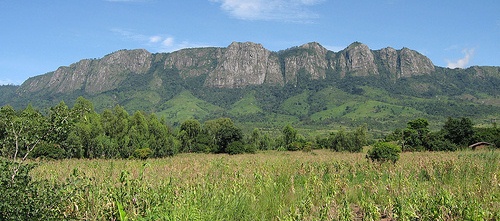
For a place literally translated as "a place where people do not go", Sapitwa Peak of Mulanje Mountain is a popular tourist attraction. Sapitwa soaring at (3001m), the highest point in Central Africa is achievable without any technical experience, a worthy goal and totally unresistable to any hiker. The mountain itself is stunning, from the landscape to the views, pools, rivers and waterfalls.


But nothing is complete without a good old myth. It’s the pinch of salt that brings out that flavor of  the expedition. With superstition being rather common in the country; it’s not surprising the mountain has its very own myth. 

Since time immemorial, there have been some beliefs to the effect that ancestral spirits of the people that once lived around Mulanje Mountain are still present.


These spirits are manifested in different ways. For example, the are testimonies to the effect that  people have found already prepared food on the Sapitwa and all one  has to do if faced with such a situation is to just eat the food and never invite friends to help you finish the meal. So, this food could be anything an example could be an enormous pile of bananas. Seriously? Who could possibly finish that by themselves without assistance from a friend? Other examples have been honey and even the local staple having already been prepared. Trust me, when you hear a local from that area tell the story, they will tell it in all seriousness, even chiefs. Whether you believe it or not, this belief is deeply rooted.

Some myths are just strange though, this one is an example. Usually myths are supposed to have a story to it, either there was good and evil, right and wrong, heroes and villains, and something happened to end the way it did. But in this case there are spirits who indirectly ask you to follow instructions or face the consequences. But why? Is there a deeper meaning? A greater purpose maybe? Or is it for just a good laugh? Anyway, I personally if faced in such a scenario would 'probably' eat whatever it is probably of fear of the unknown, only because the myth isn’t really clear why.  Perhaps it is a kind gesture by the spirits? If that's the case would it seem as being rude if you did not eat? Whatever the case, there is a sense that the spirits are always watching.


There has also been mysterious missing of people at the Sapitwa Peak. According to the locals this happens if a person angers the spirits and is disobeying instructions. It is believed that spirits of ancestors of people around the area roam the mountain and snatch people if they are displeased by something. Usually people still refer to the food gesture, whether you don't eat, don't finish or you share it with a friend, perhaps they get offended. So comes the real issue, if someone does go missing does it support the myth? A few people have gone missing, but then what does that mean concerning the myth?

Although the myths cannot be proven scientifically, locals believe them as the idea is deeply rooted in their minds and culture, and because several people have gone missing in the mountain but no bodies have ever been found despite exhaustive searches thus strengthening their belief. But whether it is true or not hasn’t stop me from going there. I’ve been there a couple times, once even in 6th grade. Whether it’s true, or just a myth, just make sure when you're hiking you’re prepared to eat whatever comes your way.


Saturday, 21 April 2012

Kingdom above the clouds, Zomba plateau


One of the most historical sites in Malawi has definitely got to be the quiet town of Zomba. Full of historical buildings and sites it seems like time has stood still for years. Zomba is a colonial town in Malawi and it was the original capital city of the warm heart before the current capital, Lilongwe.  As the other towns and cities are changing rapidly, Zomba still has an essence of heritage and is a longstanding testament of how far the country has come since breaking its colonial chains.


Zomba sits in the shadow of a massive plateau.  The famous plateau which is situated among the mountains, high above the surrounding area bears a striking resemblance to Hogsback from Lord of the Rings, with the Amatola Basin far below it. And it is rumoured to have inspired parts of the book.


So on the drive to Zomba, before you even come close to the town, the plateau is clearly visible, you definitely couldn’t miss it. And when we got to the town we took the spiraling tarmac road that leads to the top, and the views were amazing. The plateau overlooks a number of landmarks such as the Shire river valley and Mulanje Mountain.


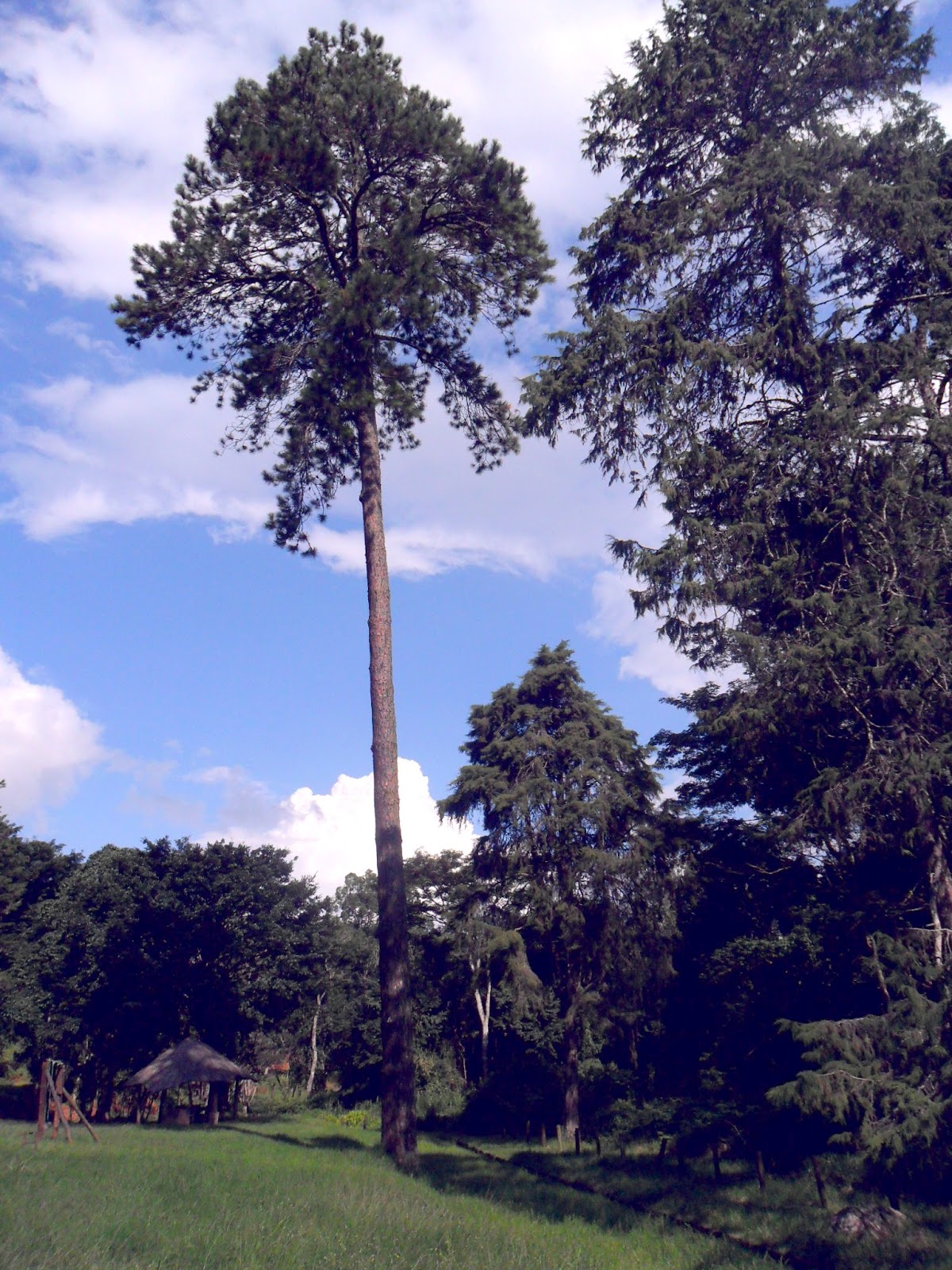
Cypress, Mexican pine and unique Mulanje Cedar carpet the plateau as well as some other weird and wonderful. It’s an evergreen paradise.


Once we arrived at the top, we passed popular places on the plateau such as Mulunguzi dam and Ku Chawe Inn before we arrived at our destination, the trout farm. 


Camping is literally the way to go, but if you would prefer a bed and a place with solar power, then there are wooden cabins available.


It was quiet, cool and peaceful.... until we arrived of course. We were virtually the only people in the area apart from the caretakers. There was just something about the place that amazed me; it felt like nothing else mattered. It’s funny, but you have to go camping to understand what I’m talking about, with no electricity and technology you actually focus on the important things in life.


Streams carve all over the plateau as some gigantic trees tower over it. The walks are stunning, taking you to some of the most spectacular places in Malawi.


Honestly it was an amazing experience, with amazing views and with amazing friends. A perfect way to get away for a while.


Wednesday, 21 March 2012

Chewa story of Napolo the ancient rain serpent


Many mountains in Malawi are closely associated with the spirit world and when mentioned or talked about with others stir up feelings of fear and curiosity among many Malawians. Many locals are really superstitious and their beliefs are quite strong. It is at these mountains where shrines in the past were erected. Some shrines were dedicated to ancestors such as past chiefs who were the guardians of the mountains, other were shrine dedicated to other things, things such as rain. At Kungoni cultural centre in Dedza, there are wall paintings depicting rituals praying for rain.


And to the Chewa people the spirit of rain was an entity or being that manifested itself as a colossal snake. The python in Chewa is closely identified mythologically with water, rivers and deep pools, and thus with rainfall. And this is depicted in a lot of Chewa art, stories and writing.


The enormous snake is named Napolo. And when mentioned, quite a lot of people will remember the stories behind it, but the newer generations will probably not know. Napolo was portrayed as a spirit, as a vicious wild animal or as a snake and these terms are used interchangeably. Napolo tends to be seen as a huge subterranean serpent-spirit, associated with water.  It was said to dwell in the mountain in a deep sacred pool, at the place of spirits. 


 It is invisible, but it has the form of a huge snake, and it is active like a wild animal destroying people and property as it makes its way, at intervals, to the lake and with it comes rain. It was depicted as having left the deep sacred pools within the mountain and as having moved to Lake Chilwa, coming down as or with water. Napolo was further described as having torn up trees and having separated or detached the earth or soil from the mountain causing landslides. Like other spirits it is said it cannot be seen but if one does see them, the person would surely die.

There were cases in which Napolo was said to have moved from one area to another causing widespread death and destruction as it snaked its way to its destination.


In Zomba, in 1946 there was extensive devastation when several bridges were washed away and many villages were destroyed by a huge deluge of water that came down the mountain after torrential rain on the plateau. It was said Napolo had moved from the depths of the mountain to the swampy Lake Chilwa.


And in Phalombe, around Mulanje mountain, in 1991 Napolo was said to have move again. After torrential rain in southern Malawi the people in the neighbouring villages felt like the whole mountain was coming down on them. There was a flash flood and land slide. Boulders cascaded and trees tumbled down with the muddy deluge that completely swept away all the bridges on the Phalombe-Mulanje road and annihilated the region of Phalombe killing hundreds of people. 


Since then there have been yearly seasonal flooding in the lower shire valley, but no floods of immense proportion around these mountain areas. Has Napolo found a permanent resting place in the sacred pools? Or is it a matter of time till it wakes and wrecks havoc once again?