Showing posts with label Zomba. Show all posts

Saturday, 19 July 2014

The Abyss of Zomba plateau, Chingwe's Hole


In the quiet town of Zomba stands a legendary, enormous plateau, known for its splendor. Trees, shrubs, grass and all sorts of flora embrace every inch of it and rivers and streams snake through its beautiful landscape. It is a serene and captivating wonderland, but it wasn’t always a sight of tranquility.

Many years ago, this calm haven was a place of fear and death. What happened on this plateau personified it as a devourer of souls. It had a horrible reputation. This majestic plateau has a cave and legend has it that this cave it bottomless, an abyss into nothingness. Some say it reaches the base of the Rift valley, others give specific depths.


It is said Village chiefs of the surrounding area disposed of their enemies by throwing them down the mouth of the plateau. It was not only enemies of chiefs that met such a hideous fate, but also lepers and people suffering from mental illness. There have also been rumors that political enemies were also silenced this way too.

One can only imagine that others suffered the same. Imagine a tale of love and jealousy, a tale of betrayal and revenge. Or perhaps someone was thrown into the abyss because they saw or heard something the shouldn't have. One of Malawi’s great writers and poets wrote a poem depicting what happened to people.

Glory be to Chingwe’s Hole

Chingwe’s Hole, you devoured the Chief’s prisoners
Once, easy villagers decked in leopard colours
Pounding down their energies and their sight.
You choked minstrel lovers with wild granadilla
Once, rolling under burning flamboyant trees.

Do you remember Frog the carver carving Ebony Beauty?
Do you remember Frog’s pin on Ebony Beauty’s head
That brought Ebony to Life? And when the Chief
Heard of a beauty betrothed to Frog, whose dogs
Beat up the bushes to claim Ebony for the chief?

Even when Fly alarmed Frog of the impending hounds
Who cracked Fly’s bones? Chingwe’s Hole, woodpeckers
Once poised for vermillion strawberries merely
Watched fellow squirrels bundled up in sacks
Alive as your jaws gnawed at their brittle bones.
Chingwe’s Hole, how dare I praise you knowing whose
Marrow still flows in murky Namitembo River below you?
You strangled our details boating your plush dishes,
Dare I glorify your rope and depth epitomizing horror?

Of Chameleons and Gods: Poems by Jack Mpange

One can only imagine what lies beneath. Perhaps there are thousands of bones or items of great value. Whatever the case, the secrets that the victims might have kept have long been taken with them beyond the plains. If you find yourself on the plateau, do you have the courage to gaze through the abyss?


Saturday, 21 April 2012

Kingdom above the clouds, Zomba plateau


One of the most historical sites in Malawi has definitely got to be the quiet town of Zomba. Full of historical buildings and sites it seems like time has stood still for years. Zomba is a colonial town in Malawi and it was the original capital city of the warm heart before the current capital, Lilongwe.  As the other towns and cities are changing rapidly, Zomba still has an essence of heritage and is a longstanding testament of how far the country has come since breaking its colonial chains.


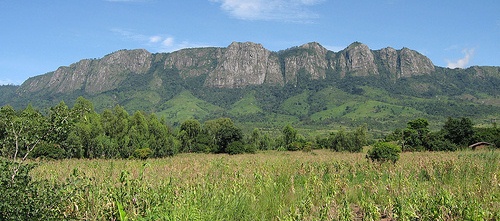
Zomba sits in the shadow of a massive plateau.  The famous plateau which is situated among the mountains, high above the surrounding area bears a striking resemblance to Hogsback from Lord of the Rings, with the Amatola Basin far below it. And it is rumoured to have inspired parts of the book.


So on the drive to Zomba, before you even come close to the town, the plateau is clearly visible, you definitely couldn’t miss it. And when we got to the town we took the spiraling tarmac road that leads to the top, and the views were amazing. The plateau overlooks a number of landmarks such as the Shire river valley and Mulanje Mountain.


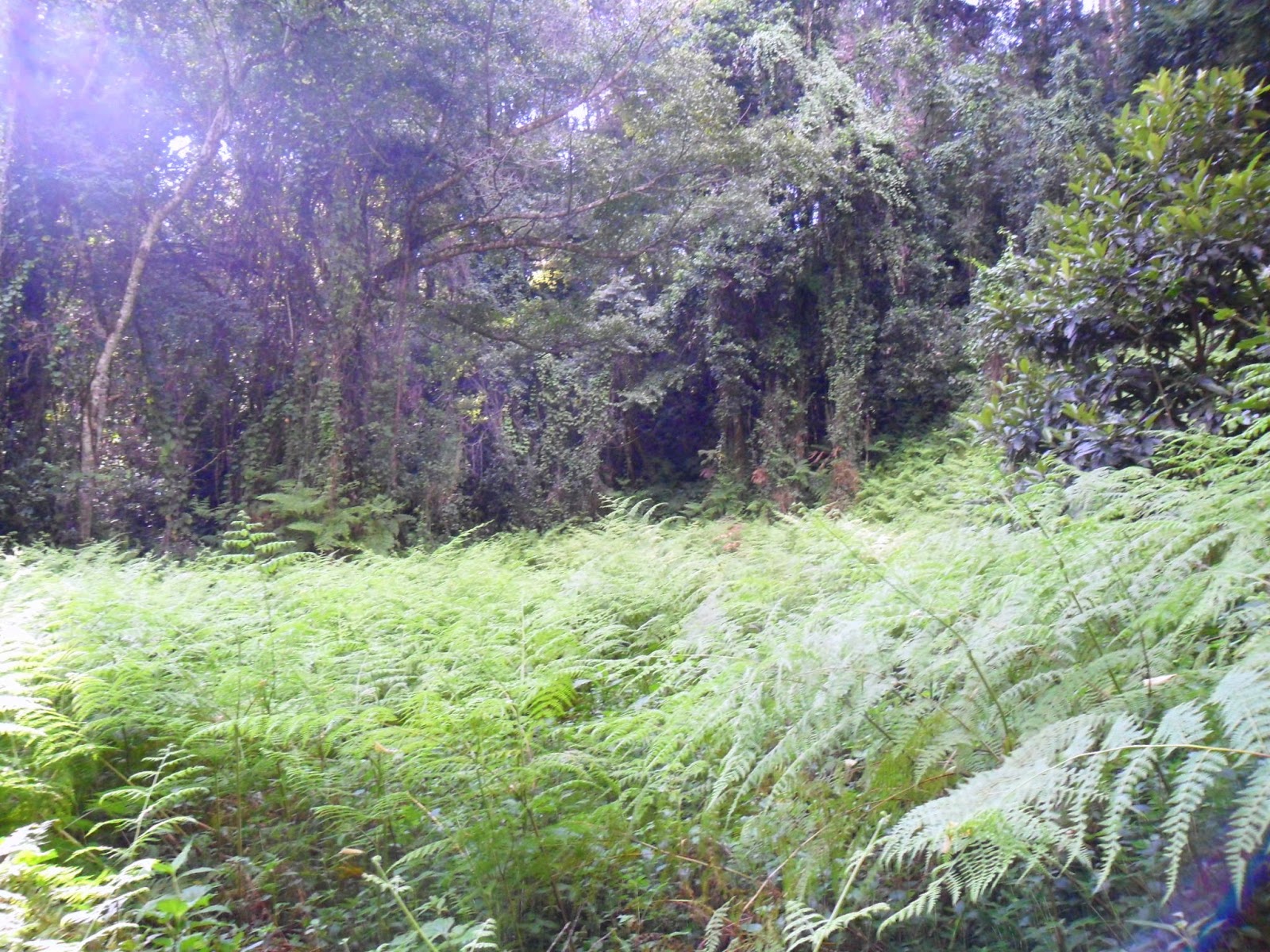
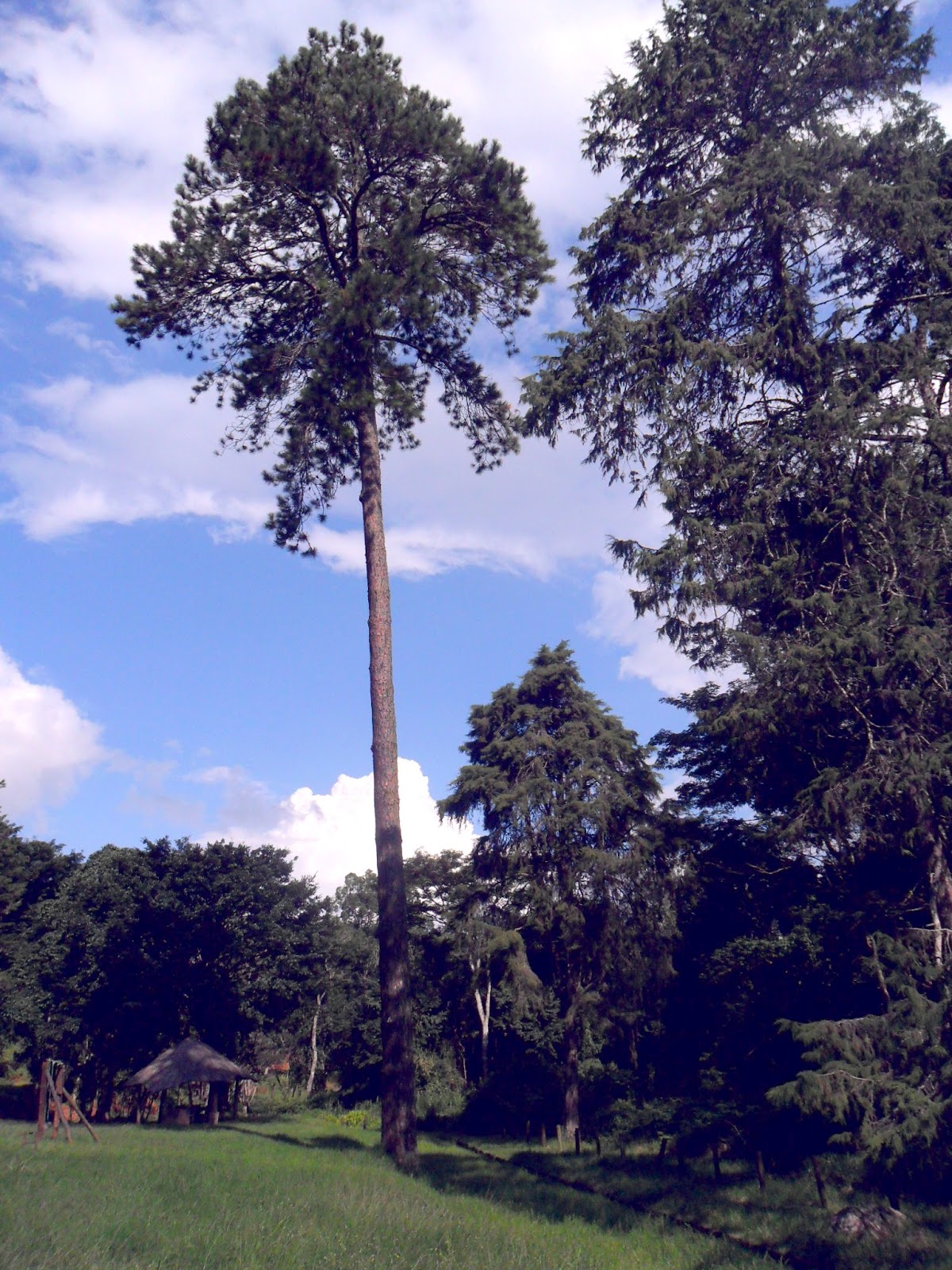
Cypress, Mexican pine and unique Mulanje Cedar carpet the plateau as well as some other weird and wonderful. It’s an evergreen paradise.


Once we arrived at the top, we passed popular places on the plateau such as Mulunguzi dam and Ku Chawe Inn before we arrived at our destination, the trout farm. 


Camping is literally the way to go, but if you would prefer a bed and a place with solar power, then there are wooden cabins available.


It was quiet, cool and peaceful.... until we arrived of course. We were virtually the only people in the area apart from the caretakers. There was just something about the place that amazed me; it felt like nothing else mattered. It’s funny, but you have to go camping to understand what I’m talking about, with no electricity and technology you actually focus on the important things in life.


Streams carve all over the plateau as some gigantic trees tower over it. The walks are stunning, taking you to some of the most spectacular places in Malawi.


Honestly it was an amazing experience, with amazing views and with amazing friends. A perfect way to get away for a while.


Wednesday, 21 March 2012

Chewa story of Napolo the ancient rain serpent


Many mountains in Malawi are closely associated with the spirit world and when mentioned or talked about with others stir up feelings of fear and curiosity among many Malawians. Many locals are really superstitious and their beliefs are quite strong. It is at these mountains where shrines in the past were erected. Some shrines were dedicated to ancestors such as past chiefs who were the guardians of the mountains, other were shrine dedicated to other things, things such as rain. At Kungoni cultural centre in Dedza, there are wall paintings depicting rituals praying for rain.


And to the Chewa people the spirit of rain was an entity or being that manifested itself as a colossal snake. The python in Chewa is closely identified mythologically with water, rivers and deep pools, and thus with rainfall. And this is depicted in a lot of Chewa art, stories and writing.


The enormous snake is named Napolo. And when mentioned, quite a lot of people will remember the stories behind it, but the newer generations will probably not know. Napolo was portrayed as a spirit, as a vicious wild animal or as a snake and these terms are used interchangeably. Napolo tends to be seen as a huge subterranean serpent-spirit, associated with water.  It was said to dwell in the mountain in a deep sacred pool, at the place of spirits. 


 It is invisible, but it has the form of a huge snake, and it is active like a wild animal destroying people and property as it makes its way, at intervals, to the lake and with it comes rain. It was depicted as having left the deep sacred pools within the mountain and as having moved to Lake Chilwa, coming down as or with water. Napolo was further described as having torn up trees and having separated or detached the earth or soil from the mountain causing landslides. Like other spirits it is said it cannot be seen but if one does see them, the person would surely die.

There were cases in which Napolo was said to have moved from one area to another causing widespread death and destruction as it snaked its way to its destination.


In Zomba, in 1946 there was extensive devastation when several bridges were washed away and many villages were destroyed by a huge deluge of water that came down the mountain after torrential rain on the plateau. It was said Napolo had moved from the depths of the mountain to the swampy Lake Chilwa.


And in Phalombe, around Mulanje mountain, in 1991 Napolo was said to have move again. After torrential rain in southern Malawi the people in the neighbouring villages felt like the whole mountain was coming down on them. There was a flash flood and land slide. Boulders cascaded and trees tumbled down with the muddy deluge that completely swept away all the bridges on the Phalombe-Mulanje road and annihilated the region of Phalombe killing hundreds of people. 


Since then there have been yearly seasonal flooding in the lower shire valley, but no floods of immense proportion around these mountain areas. Has Napolo found a permanent resting place in the sacred pools? Or is it a matter of time till it wakes and wrecks havoc once again?

Monday, 19 March 2012

Michiru Mountain, Blantyre


Blantyre, Malawi’s centre of finance and commerce is a bustling city. Known as the commercial city of Malawi it is always busy to the point that your thoughts are drowned by the hooting of vehicles, whistling of trains, roaring of trucks and not to mention the daily commotion of trading areas.

But I thought to myself, where is the nearest place you can feel miles away from the commotion and babble but still stay as close to Blantyre as possible? I looked around Blantyre and the answer was staring at me. It was obvious. Blantyre lies in a hilly area and is surrounded by mountains, Soche, Ndirande, Chiradzulu and Michiru Mountain. So it was just a matter of which Mountain. The choice was made when my friends wanted to go hiking and we chose one of the closest mountains to the heart of Blantyre, Michiru Mountain. The mountain stands at 1205 meters / 3953 feet and offers views of Blantyre.

So we took a bus early in the morning that took us from Blantyre to Chilomoni, one of the large residential areas of Blantyre. And we took the bus all the way to its very last stop, and when we looked up, we were at the foot of the mountain. For the very first part of the hike the roads and paths were wide and clear, this is because the Roman Catholics use the mountain during Easter for ''The Way Of The Cross. A series of orange crosses in the area mark the various stations at which they stop and have prayers, and at the top of that particular area of the mountain lies a large cross that can be seen from Blantyre. But after that the paths become narrow and they divert in all sorts of directions, so you will need a guide or someone who knows the area pretty well.

Already, barely minutes into our journey, the stunning views started appearing. Just one glance and we knew the view was going to get even better the higher we went. But getting up in certain areas was a little harder than we thought.


Because of the steepness of certain areas, you needed good grip; use both hands and probably a hand from someone above. But when we got to a ridge at the top it was worth it. We were surrounded by a forest of pine trees and thick, lush grass, and everything was drowned in thick cloud. It started to rain, but it was just showers nothing heavy. It was like a Movie scene. There were beautiful and bizarre flowers, the smell of pine trees, and there was nothing you could hear besides the drizzle and yourself breathing.


But as we moved further and further away from the Chilomoni section of the mountain, the clouds disappeared and the perfect view of Blantyre came into sight. You can also see areas such as Zomba, Mulanje as well as the Shire valley. And when we reached the top you could see everything but hear nothing, everything was on mute. And you could see the whole mountain chain, snaking its way into the distance.

On our hike we saw mushrooms of all colours, shapes and sizes. These are only found in the mountain areas, rarely seen in and around the cities. And clearly most, if not all are not edible, but traditional healers use some for medicinal and spiritual reasons. 


We had climbed the mountain at it southern part and travelled up north along it. On our descent the silence was broken by the screeching of monkeys and the sound of waterfalls. The river carved its way between a part of the mountain. On one side a was steep, rocky mountain side, and the other a near vertical cliff. Caves are scattered all over the mountain, so its best to be cautious as well as have a guide. The mountain also has a conservation area for forestry, farming and a nature reserve so it’s worthwhile to have a look.


Eventually we made our way to the foot of the mountain and the area looked like the savannah in the rainy season. Everything was bright green and from the bottom the whole mountain could be seen. We took a moment to take it all in, for we saw how far we hiked and we realised we were kilometres away from Blantyre. We didn’t take a bus back home, we walked, but all in all it was worth it.