Saturday, 21 April 2012

Kingdom above the clouds, Zomba plateau


One of the most historical sites in Malawi has definitely got to be the quiet town of Zomba. Full of historical buildings and sites it seems like time has stood still for years. Zomba is a colonial town in Malawi and it was the original capital city of the warm heart before the current capital, Lilongwe.  As the other towns and cities are changing rapidly, Zomba still has an essence of heritage and is a longstanding testament of how far the country has come since breaking its colonial chains.


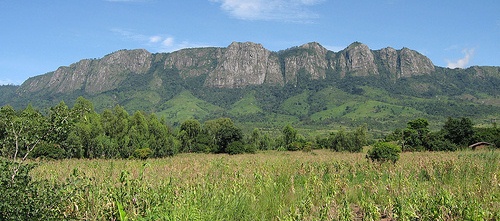
Zomba sits in the shadow of a massive plateau.  The famous plateau which is situated among the mountains, high above the surrounding area bears a striking resemblance to Hogsback from Lord of the Rings, with the Amatola Basin far below it. And it is rumoured to have inspired parts of the book.


So on the drive to Zomba, before you even come close to the town, the plateau is clearly visible, you definitely couldn’t miss it. And when we got to the town we took the spiraling tarmac road that leads to the top, and the views were amazing. The plateau overlooks a number of landmarks such as the Shire river valley and Mulanje Mountain.


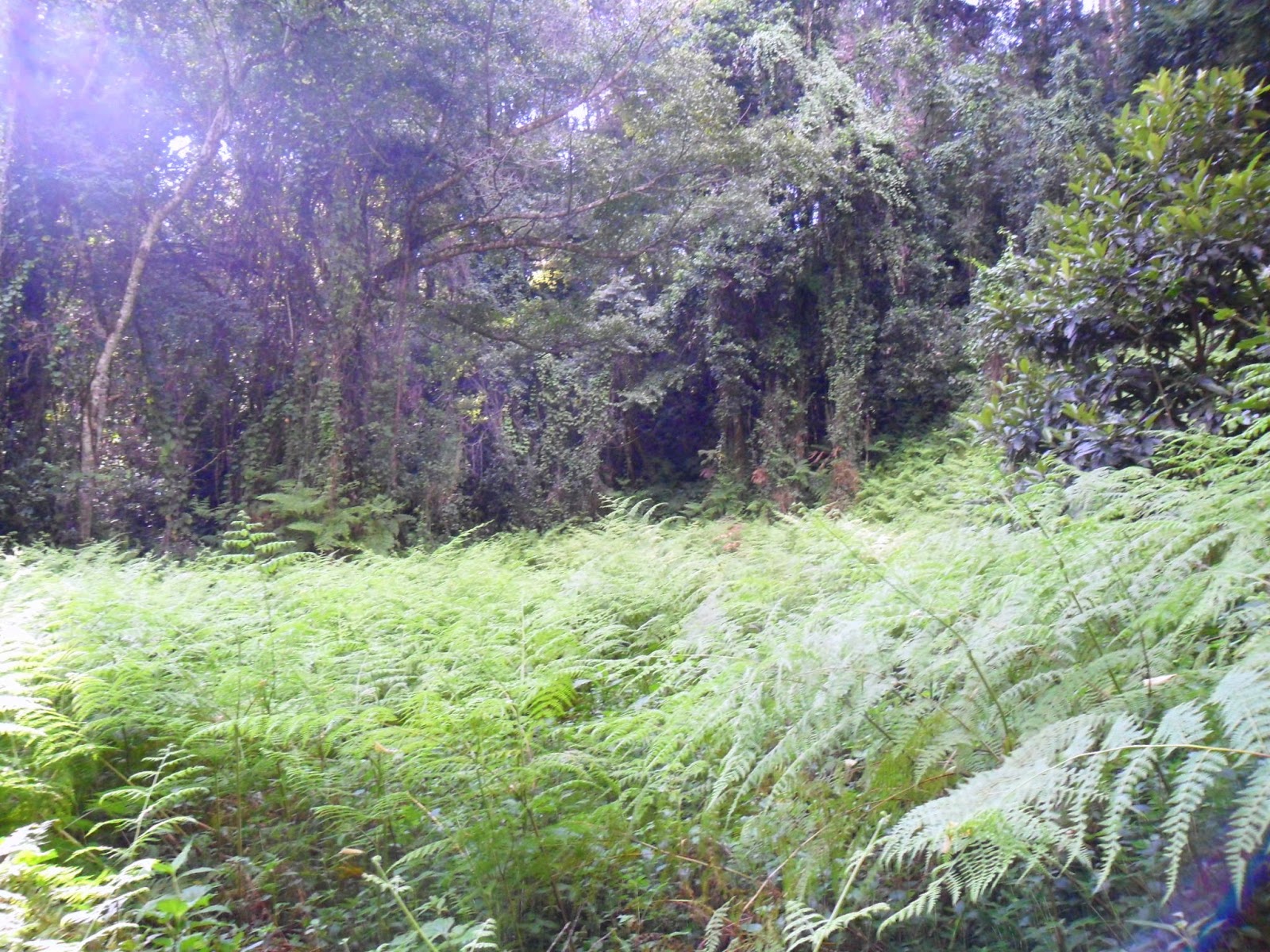
Cypress, Mexican pine and unique Mulanje Cedar carpet the plateau as well as some other weird and wonderful. It’s an evergreen paradise.


Once we arrived at the top, we passed popular places on the plateau such as Mulunguzi dam and Ku Chawe Inn before we arrived at our destination, the trout farm. 


Camping is literally the way to go, but if you would prefer a bed and a place with solar power, then there are wooden cabins available.


It was quiet, cool and peaceful.... until we arrived of course. We were virtually the only people in the area apart from the caretakers. There was just something about the place that amazed me; it felt like nothing else mattered. It’s funny, but you have to go camping to understand what I’m talking about, with no electricity and technology you actually focus on the important things in life.


Streams carve all over the plateau as some gigantic trees tower over it. The walks are stunning, taking you to some of the most spectacular places in Malawi.
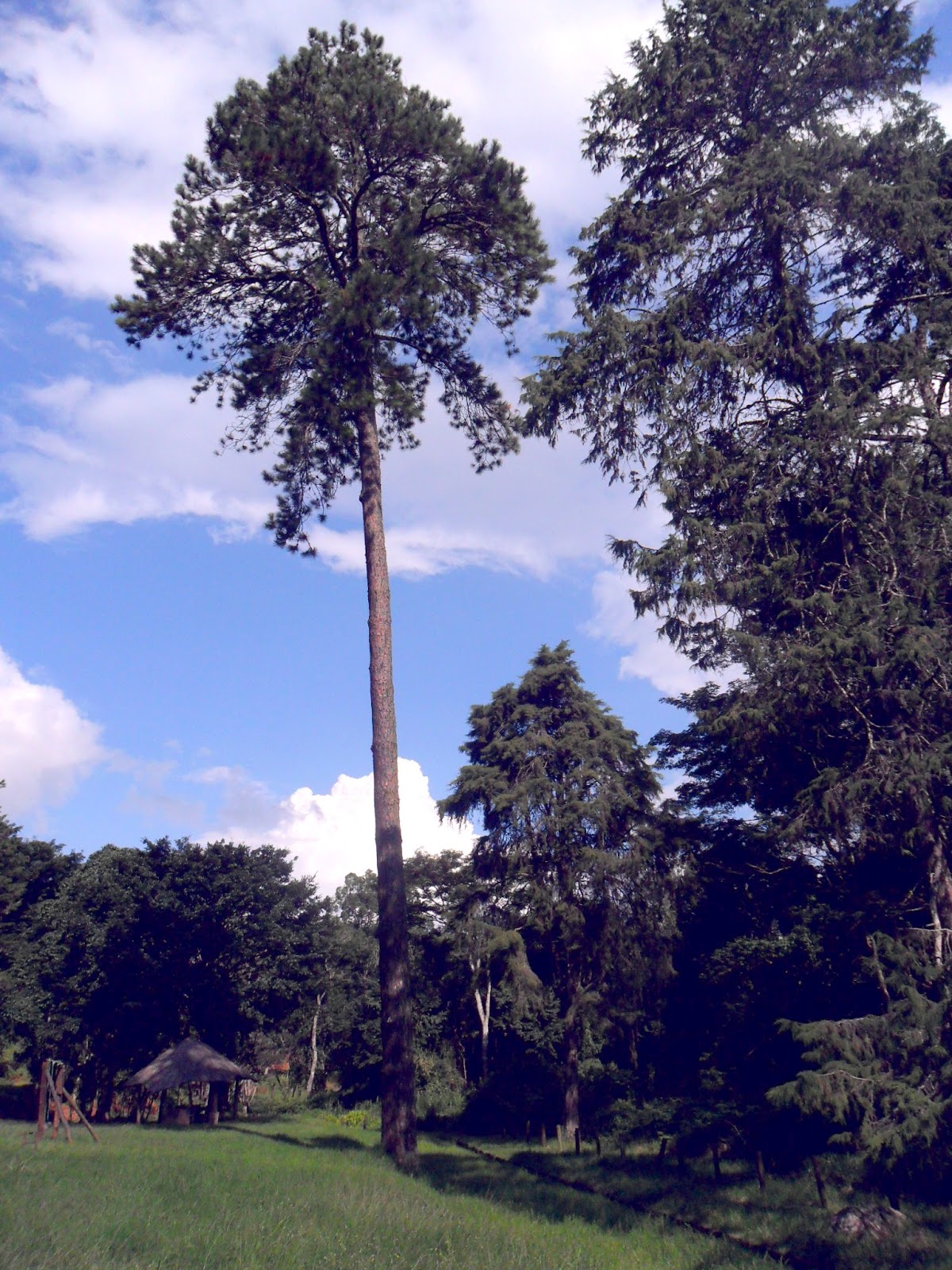


Honestly it was an amazing experience, with amazing views and with amazing friends. A perfect way to get away for a while.


Thursday, 22 March 2012

Lower Shire valley safari, Majete game reserve, Chikwawa


As you leave Blantyre on its southern exit and head towards Chikwawa, the straight road soon becomes a winding road. The road snakes its way down a steep mountain side as you descend into the lower shire valley. And all you can see are rolling hills that blend into the horizon.


From the decent the shire river can be seen, winding and carving its way on the flat plains. The shire river drains Lake Malawi, which empties into the Zambezi then eventually the Indian Ocean.


The game reserve is only about 70km southwest of Blantyre, the commercial capital of Malawi so it’s not long until you reach the game reserve entrance. African Parks (Majete) Ltd. is the local company established by African Parks for the management of Majete Wildlife Reserve. Majete Wildlife Reserve is 691km.sq, and lies at the low attitude of about 100m. African Parks' vision is to restore, develop, and manage the Reserve in order to demonstrate biodiversity conservation and sustainable natural resource utilization for the benefit of the people of Malawi in general and local communities in particular.


It is an area of undulating and hilly country, covered in tall deciduous woodland with beautiful grassy glades and occasional patches of thicket. To the east it is mixed acacia, leadwood and marula savannah with scattered stately baobab trees and patches of ilala palms.


It is home to the elusive black rhino, elephants, buffalo, nyala, waterbuck, bushbuck, bush pig, impala, zebra sable, eland and hartebeest and many other animals. Most of which we saw, of course except the 'elusive' black rhino.


The game drive takes you through many roads within the reserve, each route specific to certain animals. There are over 150km of new roads within the Reserve.


Within the game reserve is the shire river. Hippos can also be seen in the river trail.


The Shire River forms part of the eastern boundary.


A dam was erected within the reserve that provides a dynamic force to generate power for a hydroelectric power station. Despite the intrusion wildlife thrives. An elephant could be seen in the distance, in the marshy area close to the dam.


But throughout the day we barely saw an elephant close. But when the sun started setting, there it was, right in front of us.


But as the sun set and the stars appeared in the navy blue sky, it was time to head back to Blantyre. It was a day well spent.

Wednesday, 21 March 2012

Chewa story of Napolo the ancient rain serpent


Many mountains in Malawi are closely associated with the spirit world and when mentioned or talked about with others stir up feelings of fear and curiosity among many Malawians. Many locals are really superstitious and their beliefs are quite strong. It is at these mountains where shrines in the past were erected. Some shrines were dedicated to ancestors such as past chiefs who were the guardians of the mountains, other were shrine dedicated to other things, things such as rain. At Kungoni cultural centre in Dedza, there are wall paintings depicting rituals praying for rain.


And to the Chewa people the spirit of rain was an entity or being that manifested itself as a colossal snake. The python in Chewa is closely identified mythologically with water, rivers and deep pools, and thus with rainfall. And this is depicted in a lot of Chewa art, stories and writing.


The enormous snake is named Napolo. And when mentioned, quite a lot of people will remember the stories behind it, but the newer generations will probably not know. Napolo was portrayed as a spirit, as a vicious wild animal or as a snake and these terms are used interchangeably. Napolo tends to be seen as a huge subterranean serpent-spirit, associated with water.  It was said to dwell in the mountain in a deep sacred pool, at the place of spirits. 


 It is invisible, but it has the form of a huge snake, and it is active like a wild animal destroying people and property as it makes its way, at intervals, to the lake and with it comes rain. It was depicted as having left the deep sacred pools within the mountain and as having moved to Lake Chilwa, coming down as or with water. Napolo was further described as having torn up trees and having separated or detached the earth or soil from the mountain causing landslides. Like other spirits it is said it cannot be seen but if one does see them, the person would surely die.

There were cases in which Napolo was said to have moved from one area to another causing widespread death and destruction as it snaked its way to its destination.


In Zomba, in 1946 there was extensive devastation when several bridges were washed away and many villages were destroyed by a huge deluge of water that came down the mountain after torrential rain on the plateau. It was said Napolo had moved from the depths of the mountain to the swampy Lake Chilwa.


And in Phalombe, around Mulanje mountain, in 1991 Napolo was said to have move again. After torrential rain in southern Malawi the people in the neighbouring villages felt like the whole mountain was coming down on them. There was a flash flood and land slide. Boulders cascaded and trees tumbled down with the muddy deluge that completely swept away all the bridges on the Phalombe-Mulanje road and annihilated the region of Phalombe killing hundreds of people. 


Since then there have been yearly seasonal flooding in the lower shire valley, but no floods of immense proportion around these mountain areas. Has Napolo found a permanent resting place in the sacred pools? Or is it a matter of time till it wakes and wrecks havoc once again?